photo

photo
Photo by Rebecca Gould Photography

Wednesday, September 10, 2014

Hives

I have only ever seen a very few hives on Susan.

For better or for worse, Susan has never really gotten hives.  Even when she had her worst anaphylactic reactions, she never had hives. 

I can count on less than one hand the times Susan has had hives prior to being enrolled in the clinical trial.

Three times, exactly -- once, a single hive on her face after eating out at a local restaurant, a second time at school, a smattering of them across her upper chest...and the medically induced hive from a scratch test during the clinical trial screening process.  That's it.


During the food challenge that resulted in her being enrolled in the clinical trial, Susan developed hives...and then, once, shortly after being enrolled in the clinical trial, while selling Girl Scout cookies (not a single box was open), she developed a giant "mystery" hive on her cheek.


Susan developed hives during the rapid desensitization and from that point forward, walked around with a hivey rash on her back, chest and cheeks that seemed to improve and worsen with only a vague connection to Susan's daily dose...


The "hivey state" continued through the middle of July, at which point it mostly subsided, to the point that it was pretty much resolved.  Surprisingly, I cannot remember when I stopped checking (read:  scrutinizing) Susan's skin daily, but I know that it was sometime in July.


Fast forward to now.


For those of you who have followed our journey, I have every reason to believe that Susan originally received injections of the placebo during the build-up phase of the PRROTECT Clinical Trial that she is in.  I have every reason to believe that since she is now receiving open-label injections of Xolair, the medication that is believed to inhibit the body's autoimmune response thereby allowing for rapid desensitization to peanut through oral immunotherapy, Susan will do well.

But...

Something happened in late August that gave me pause.
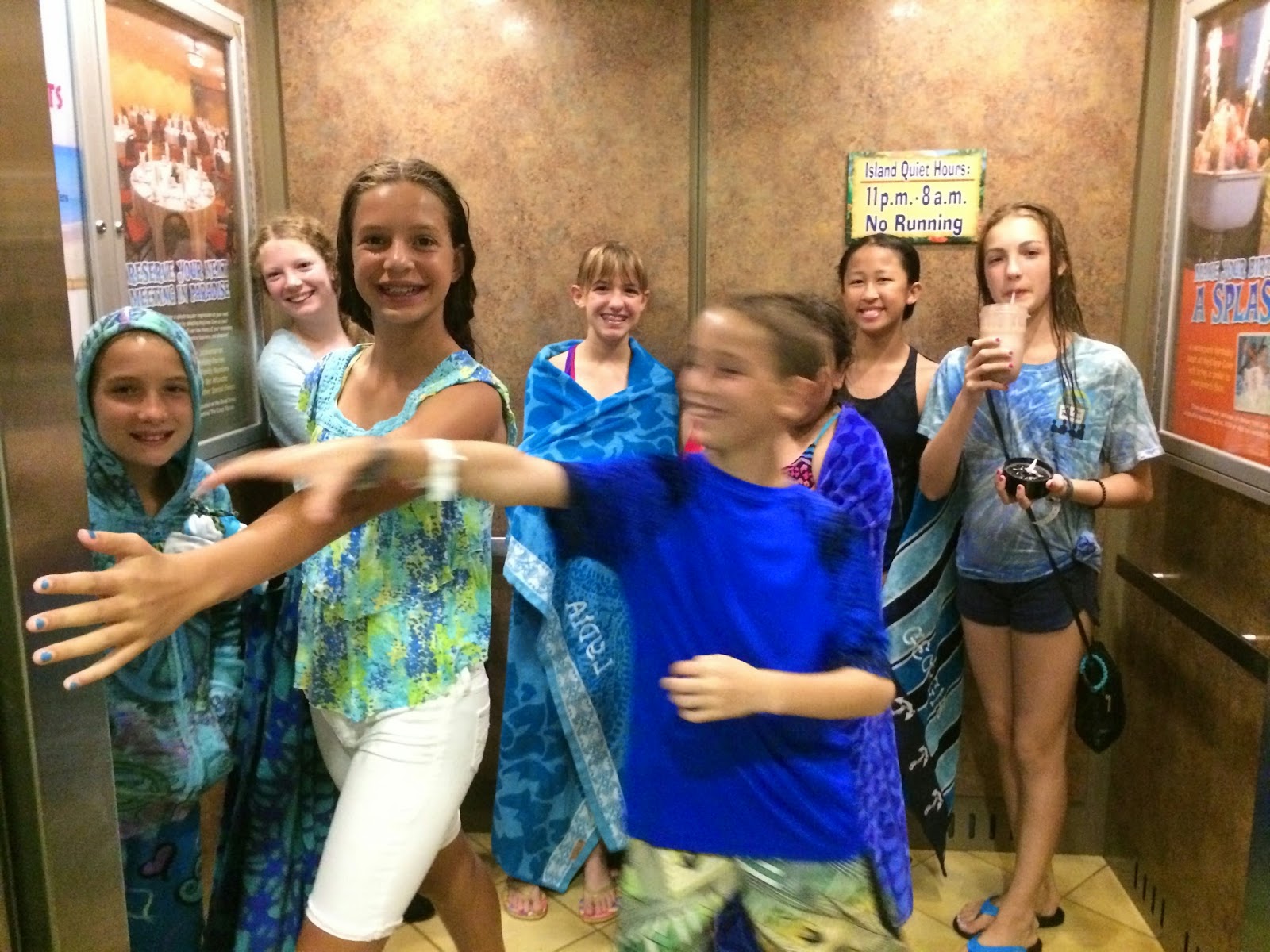
We were celebrating Susan's birthday at Key Lime Cove...she was in a bathing suit...and I realized that she had hives...and not just a few...

Since then, I have watched her skin carefully.
Sometimes she has hives.

Other times, not so much.

Her cheeks were flush and her hivey rash was far more present than not during our most recent visit to the Clinical Research Unit (CRU).  The doctor observed this...and because there are three doctors, and we do not always see the same one, we talked about the condition of Susan's skin rather at length.  I could tell that the doctor was surprised. 

(I felt that her veiled -- for I am sure Susan did not pick up on it -- surprise confirmed a niggling bad feeling I have been having.) 

There is a part of me that wants to call the clinical trial coordinators or one of the doctors we have come to know and trust.  I want to share my fears with them.  I want them to reassure me that all will go well when Susan begins the rapid desensitization to peanut in the middle of September.

The hives haunt me.
For, if Susan's autoimmune reaction to peanuts is supposed to have been inhibited by the Xolair, why does she have hives?

Why, after all these weeks of injections of what we know is Xolair, is Susan's skin looking like this?


The image of Susan's hives is with me at all times.
I think about her skin, peppered with angry little red marks at red lights, while reading, in the grocery store...I cannot shake it.

I find myself thinking that surely, surely they mean nothing.  I find myself absently and ferociously (yes, at the same time) thinking that she just has to have a good outcome -- that after all she has been through, surely, SURELY she deserves for this to go well.

And then I am immediately ashamed, and sorrowful, for I am painfully aware that far more children than I can possibly imagine face terribly frightening, painful and uncertain medical procedures and treatments every day...and that for them, the outcomes are no more guaranteed than Susan's.  I am particularly aware of those children living with cancer and cystic fibrosis and premature birth because of personal connections...but I am sure that there are hundreds of other ravages children face every day that I can hardly fathom.

And then I pause...for this is not just about Susan. 
It never has been.
This is for the hundreds and thousands of children (and adults) living with food allergies...whose lives are defined, limited or controlled by their food allergies. 

As much as I desperately want this clinical trial to work for Susan, I also want it to work because of its potential impact, its promise...


For as devastating as it is to imagine that Susan might not have a favorable outcome as a result of the clinical trial, it is even more difficult for me to imagine what it will mean for countless others if she does not...

Wednesday, September 3, 2014

Susan's Assent

Susan turned 12 on August 21st.

On her last visit to the Clinical Research Unit (CRU) as an 11-year-old, the clinical trial coordinator told us that Susan would need to sign an "assent" during her next visit.  She explained that "assents" are required for all children aged 12 and older who are participating in a clinical trial.  She further explained that the assent form would be similar to the consent Susan and I reviewed during her intake visit.  

Susan and I talked a bit about the assent on the way home.

To ME, it seemed like a huge deal...but, even as I tried to talk about it with Susan, I could tell that to her, it just was not all that big of a deal.


I let it go.
(I was thinking I would revisit the discussion at another time, but it never came up easily...)


And so, when Susan had her appointment in the CRU shortly after she turned 12, we had not had any further discussion.

To me, the idea that Susan would sign what is essentially a consent for her continued participation in the clinical trial was HUGE.  I knew her signature would be the first of what I hope to be countless future formal signatures on her part -- college applications (is that required any more?), first real bank account, job applications, maybe a car loan...sometime even -- in the distant future -- maybe even a marriage license, a mortgage application?

For Susan, in this seventh grade year when so many of her friends and classmates are coming of age -- celebrating their Bar Mitzvahs and Bat Mitzvahs, Susan is experiencing her own coming of age...with an opportunity to make significant decisions in the management and treatment of her food allergies.


So...when the clinical trial presented the paperwork to Susan for review (shorter than my copy by a few pages, but still lengthy), I felt that something momentous was happening...and I wanted Susan to feel that way, too.  

Focused (as she is in almost all that she does), Susan began reading.  After a while, she looked up -- "Mom, we already went over all of this."

"Yes, but now YOU are signing -- agreeing to participate.  This is your chance to review the clinical trial protocol, to ask questions..."  

Susan nodded, looking carefully, steadily at me.  "I already know what to expect.  And I don't have any questions."

In the back of my mind, a tiny part of me (not the part of me that knows Susan well...not the part of me that has witnessed her calm, quiet determination throughout...) wondered if Susan would take the moment in which she was asked to sign her assent to...not.


Of course, when I think back to those quiet moments in the room in the CRU, I do not believe that thought ever crossed Susan's mind.

Susan's certainty holds me steady.

Tuesday, September 2, 2014

Optimism

Today was Susan's Week 10 appointment at Lurie in the Clinical Research Unit (CRU).  She had three injections of Xolair (I know for certain she is receiving 450 mg of Xolair every time we go for an injection visit because we are now in the Open Label Injection arm of the clinical trial).  I remember well the optimism I felt at Susan's first Week 10 visit -- while I was not exactly excited about the rapid desensitization to peanut she would undergo during Week 12, I was looking forward to seeing how much more peanut she would be able to tolerate than she had been able to tolerate during the intake. 

[And yes, of course...in the back of my mind, I knew Susan might be in the control group, and that it might not go so well, but, at her Week 10 appointment, I was feeling pretty optimistic.  The odds were good -- of the 9 children enrolled in the clinical trial at Lurie, only TWO were in the control group -- only TWO had been receiving the placebo...that meant it was more likely than not (by a lot!) that Susan had been receiving the Xolair.]

Looking back, I have to confess that while I understood the very real possibility that Susan was in the control group -- to the point that I could explain the possibility to others (so I wasn't in denial...), I did not even remotely fathom what it would feel like -- what it might look like -- to be in the "control group." 

Now, looking back at that time, with the hard-earned wisdom that I think [I (now) fervently HOPE] comes from having been in the control group, it is hard not to pass judgment on myself.  Why did I ever believe it could be so easy?  What kind of fantasy was I living?

And so, today, as I was sitting in the CRU with Susan and the clinical trial coordinator, I found myself remembering the optimism I felt at this same visit back in early May.  It is ever so hard to believe that we are in essentially the same place (but hopefully NOT) that we were then now...although, of course, if Susan WAS in the control group, then she did not have a 10-week build-up phase of Xolair injections behind her...and she was just as vulnerable to peanut then as she was during the intake.

Complicated?
Right.
It gets all jumbled up in my brain just thinking about it.

The bottom line:  As much as I wish I could know going into Susan's second Week 12 rapid desensitization to peanut whether or not she had been receiving the placebo, I cannot know...that's not how this clinical trial works.

And so, while I want ever so much -- to the point that I feel tears welling up every time I think about it -- for this Week 12 rapid desensitization to peanut to be different for Susan, I feel the need to remind myself that there are no guarantees.

I am encouraged by the clinical trial coordinator's casual comment that three of the subjects who recently completed their Week 12 rapid desensitization did "very well."  Susan and I talked about that in the car, as we drove to her school.  Always seeing the best of everything, Susan observed, "Mom -- it doesn't sound like any of those three were in the control group."  She didn't have to say any more.  I knew what she was thinking.  If there are 7 subjects who received the Xolair and 2 who did not, every subject who does well increases the likelihood that she received the placebo.  

While I never wanted Susan to receive the placebo, given how things went during her first rapid desensitization to peanut, I now FERVENTLY HOPE that she was receiving the placebo during her build-up phase.

I wish I could say I feel as optimistic now as I did during our Week 10 visit in May of this year. 

I did not know then what I know now.
-- I did not know that even today (nearly 2 months later) I would be able to tell you precisely how many days it has been since Susan had a delayed reaction with vomiting (58).
-- I did not know that we would reach a point where neither Susan nor I were comfortable with her being alone...a form of regression that changed (stretched, grew, and challenged) our relationship on the brink of Susan's adolescence.
-- I did not know that I would lie awake many nights wondering about the wisdom of continuing the clinical trial.
-- I could not even remotely imagine the doubts, questions and uncertainty our participation in the clinical trial would evoke in me...


Today's visit was uneventful (thankfully -- imagine if she had a reaction to the Xolair injections at this point...possible, certainly...and yet -- given what she has gone through, it is a remote possibility that I chose not to entertain).

There is a new clinical trial coordinator in training.  Susan helped show her the ropes during her breathing tests.

Look at that huge breath Susan took!

It has become my job to distract Susan during the Xolair injections, which are uncomfortable and painful even with the cold, numbing spray.  She delights in having me sing during the injections. 

I don't sing.
I never have. 
(Kinda like I don't do vomit...)
I am not the least bit musical...the most I ever do is sing Happy Birthday...and I'm pretty sure that even that is off-tune. 
I'm sure that's exactly why Susan likes me to sing while she is getting her injections.  What could be a better distraction than your mother singing Bringing Home My Baby Bumblebee (or is it Bringing Home A Baby Bumblebee?) off-tune and never quite certain about the words...

And today, for the first time in weeks, Susan released me from my standing singing obligation -- a relief to me AND to the nurses, I am quite certain!  Instead, I told a funny story about my father and a boat he bought.  She just barely remembers her Grandpa Lew, and I relish the opportunities to share my memories of him with my children.

Susan, waiting for the funny part of my story.

I do not believe I ever truly distract her during the injections, but I tell myself anything helps...and I hope that is true.

Her bravery, unwavering certainty and staunch commitment continues to astound me.

Monday, August 25, 2014

E-Mail to Susan's Seventh Grade Teachers (Good Overview)

Good Morning.

I hope your school year is off to a good start.  I waited to write this e-mail until after the first few days because I knew it would be long, and I can only imagine how chaotic and busy the first few days of school are.  

As you all know, our daughter, Susan, has a life threatening peanut allergy.  She has had airborne and contact reactions to peanut protein in a number of settings, including on an airplane, in a movie theater and while in a gymnastics class with a child who had eaten a peanut butter sandwich on the way to the program.

As I think you all know, Susan is in a clinical trial at Lurie Children's Hospital (downtown Chicago).  Because we were frightened by the risks Susan faces every time she leaves our house, we actively and aggressively pursued treatment options once we understood the seriousness of her allergy. 

We were thrilled when Susan was enrolled as the second of nine subjects in the PRROTECT Clinical Trial in February of this year.  This is a double-blind study of Xolair, a medication believed to inhibit the body's autoimmune response to allergens.  The goal is that all study subjects (including the two control subjects who will receive placebo at the outset of the clinical trial) be able to consume 2000 mg (or eight peanuts) by the end of the clinical trial (which -- if all goes perfectly -- takes 26 weeks).  

I am e-mailing you because we feel it is very important that Susan's teachers (and other staff at Northwood) understand what her experiences in the clinical trial have been like thus far -- and so that they can have some sense of what to expect in the future.

Susan's experience in the clinical trial thus far has been quite difficult.  She had a delayed, multiphasic anaphylactic reaction to the peanut she consumed during the intake evaluation (all subjects had to react to a low dose of peanut in order to be enrolled in the clinical trial).  After a three-month period in which Susan underwent clinic visits every two weeks to receive three injections of either Xolair or the placebo, she had an anaphylactic reaction during the initial rapid desensitization visit (in late May) and experienced another anaphylactic reaction the following day.  Despite the addition of multiple medications and decreasing the rate of desensitization to peanut, Susan was never able to tolerate a clinically significant peanut dose.  When school ended in June, Susan was barely tolerating a 45 mg dose of peanut.  Shortly after school ended, her dose was increased to 60 mg, which she could not tolerate.  She experienced hives, nausea, extreme fatigue and bouts of intense vomiting.  

The timing of the rapid desensitization was far from ideal, as the school year was drawing to a close when Susan was feeling her worst.  Fortunately, the 6th grade team at Northwood supported her, ensuring that she knew what she would be missing when she was absent, providing assignments and sending supportive and encouraging e-mails and text messages.

In late June (after an extremely difficult month), the Principle Investigator of the clinical trial determined that Susan had likely received the placebo and petitioned the Clinical Trial Coordinator for permission to move Susan to what is called the "Open Label Injection" arm of the clinical trial.  In July, Susan essentially started the clinical trial  over, beginning the build-up phase of Xolair.  Even during the absolute worst of it all, Susan was steadfast in her commitment to the clinical trial -- hoping that she will not only help herself but also countless others.  

Susan gave the opening remarks at the Food Allergy Research and Education Luncheon in May.  I am including a link to the YouTube video. The quality of the first 30 seconds or so of the video is quite poor, but I think it captures well both why she is so committed to the clinical trial and who she is as a person.  I know I am her mother, but I believe it is well-worth watching:  http://eatingpeanut.blogspot.com/2014/05/in-susans-voice-fare-chicago-luncheon.html

Unfortunately, the most intense part of the clinical trial will begin in mid-September.  And while I know the timing is far from ideal, we are hoping that Susan's 7th grade teachers can provide the same type of support that her 6th grade teachers did.  (We are also hoping the rapid desensitization to peanut will not be as difficult now that Susan has definitely been receiving Xolair injections).  

At this point, Susan is on a daily "maintenance dose" of 30 mg of peanut (that's 12% of a peanut).  This is the highest dose Susan was able to reasonably tolerate and it is believed to be very important that she continue consuming peanut on a daily basis, or her allergy might worsen.  There are many requirements regarding the daily peanut dose, including the timing of the dose (as close to 24-hour dose intervals as possible), the restriction of any and all physical activity and (once she begins updosing in mid-September) parental supervision for two-hours post dose.

Throughout the clinical trial, Susan will continue to carry Benadryl and Epi-Pens in her purse, which she keeps with her at all times.  She is also wearing a Medic-Alert bracelet.  Emergency responders will have access to information regarding the clinical trial should they need to access her profile through Medic-Alert.

As I think you all know, we met with the Principal, Assistant Principal, Associate Principal of Student Services and the Social Worker (I used their names) before school started to discuss the impact of the clinical trial on Susan's school attendance.  Susan, my husband and I were all VERY relieved after our meeting, because it felt like we developed a very workable plan with the support of the school district.
There are three main issues: 
1) timing of daily dose
2) absences for clinical trial appointments (some of which will be all day)
3) management of symptoms while at school (if necessary)

We are thankful that the 7th grade schedule is what it is, with PE and the CAPE classes the first two periods of the day.  And, fortunately, Susan's Spanish immersion class and Accelerated Math class are the last two periods of the day.  We have spoken with the Clinical Trial Coordinator and will schedule Susan's visits as early in the day as possible in order to try to ensure that she is back for those academically rigorous courses whenever possible.

We developed the following plan:  
1) Susan will take her peanut dose at 7:30 am.  Between now and the updosing (which will begin in mid-September), Susan will attend school after taking her maintenance dose at 7:30 am.  She will not be able to physically participate in PE.  Susan's doctors have approved of this plan because the 30 mg dose is essentially a maintenance dose.  Once she begins weekly (or more frequent) updoses, she will take her peanut dose with me at approximately 7:30 am, and I will supervise her until approximately 9:30 am. As long as she is feeling well, and has no concerning symptoms, I will bring her to school in time for 3rd period.  

Unfortunately, Susan will miss PE and Art and Music (her next CAPE segment).  I am looking forward to collaborating with those teachers who classes she will miss entirely so that I can ensure Susan learns what she needs to learn.  She is a competitive figure skater who also plays travel soccer, so fortunately the missed PE classes will not result in the loss of the only opportunity for exercise in a given day.  Susan also plays viola in the MYA orchestra, and I am hopeful that we can develop a workable plan for covering what she will miss in Music class.

2) We agreed that we would do our best to schedule appointments early in the morning (so that Susan can be back for as many of her academic courses as possible), and that we will schedule them on days when there is no school (if possible).  I will provide Susan's teachers with as much advance notice of her absences as possible, with the understanding that given the uncertain nature of this process, the plan can change at any time.  As of now, we have the following appointments scheduled:
-- Tuesday, September 2nd at 9:30 am (this should be a 1-hour appointment)
-- Monday, September 8th at 9:30 am (this should be a 1-hour appointment)
-- Monday & Tuesday, September 15th & 16th (the first is an all-day rapid-desensitization to peanut appointment;  the second day could be shorter)

3) In the Spring, when Susan was not tolerating the updoses, she experienced rapid-onset nausea followed by violent vomiting.  While we are hopeful that she will fare far better now that she has received the Xolair, we did discuss a plan that includes her being allowed to leave the classroom upon her announcing that she needs to leave and a pre-designated student being sent to follow her.  She will attempt to make it to the nurse's office, but understands that she can use any bathroom along the way (including the one in the Staff Lounge should she need to).

We scheduled a follow-up 504 Plan meeting for Tuesday, September 23rd, by which point we will have a much better understanding of how the clinical trial appears to be going.  I will keep you all informed by e-mail.  If you wish, please feel free to follow along with my blog, which is called Eating Peanut.  You can find it at:  http://eatingpeanut.blogspot.com/.  

Susan's "Week 0" was in July.  This is Susan's "Week 9."  Her "Week 12" is the week of September 15th.  This is a significant week as this is when the rapid desensitization to peanut occurs over the course of two days.  We anticipate that Susan will continue to have clinical trial appointments through the early part of next year (and possibly longer).

I know many of you are just meeting Susan for the first time this year.  Let me assure you that she is a conscientious student and a very hard worker.  She will do all that she can to keep up with her work, and, if need be, we will support her efforts with outside supports.

We are thankful beyond words for the support we received in planning the first part of Susan's 7th grade year, and look forward to working with Susan's teachers and administrators to ensure that she has the best possible school year while pursuing this potentially life-changing treatment opportunity.  It is incredible to go into what is likely to be a very stressful period of the clinical trial feeling like we have the support of the school district.

Please feel free to ask questions or share any concerns you might have.  We will do our best to answer your questions and address your concerns.

Thank you.

Friday, August 22, 2014

"Next Year" Is Here

"Next Year" is here.  

Last Spring, at several difficult times, Susan and I reminded each other that "Next Year" (read:  "Next School Year") could be infinitely easier.  We talked about what it would be like to eat out without worrying about cross-contamination with peanut and dreamed of a lunchroom experience where she would not be restricted to a "Nut Free" table.

Next year is here -- and nothing has changed.
And yet...maybe, just maybe something HAS changed...maybe the open-label Xolair injections Susan has been undergoing all summer have decreased her reactivity to peanut -- but we have no way of knowing...(at least not just yet)...

For all intents and purposes, nothing has changed.
We still eat at our handful of "tried and true" restaurants...
And Susan still sits at a Nut Free table at school (with a handful of tried-and-true friends...).

And yet...maybe something HAS changed.  Susan is in seventh grade this year.  In our community, this is the year year-of-the Bat & Bar Mitzvah...think parties, restaurants, enough unknown food and potential risk to boggle my mind.  When well-intentioned friends have asked how we planned to negotiate this difficult time, I always answered honestly "I do not know."  I have worried about this year extensively -- late at night and into the morning.  In the past, I would have tried to research in advance what was being served, to determine what would and would not be safe -- to make a plan -- and when necessary, to provide Susan with food and treats that were comparable to the menu, in an effort to minimize the ways in which she felt different.  

But, after much discussion (and in light of the no-new-food restriction we agreed to for the duration of the clinical trial) Susan has decided to "pre-eat" and to simply stash a safe treat in her purse.  For events where there might be a "real meal," she is going to carry a larger bag with a GoPicnic in it (she can eat everything but the fruit leather, which could be fine -- but falls into the "new food" category).  She is ready -- and she is most decidedly NOT worried.  She said, "Mom, it's not about the food."


While nothing has changed on the face of things this year, many things have changed for Susan, within Susan.  She is stronger, braver, and far more certain of herself.  She has taken charge of her food allergies, and while she may not have beaten them yet, she is not going to allow them to define her.

As we head into Susan's seventh grade year, I am reminded that, as with many things in life, it is often far more about the journey than it is about the destination.

While I remain tremendously hopeful that Susan's reactivity to peanut will decrease as a result of the clinical trial, I find myself increasingly aware of the growth that has occurred -- in Susan (and maybe, just maybe beyond) along the way.

Thursday, August 21, 2014

Oh, The Places We've Gone (with Peanut)

(A Summer Retrospective)

I'm pretty sure seventh graders don't write essays entitled "What I Did This Summer," but it is my most fervent hope that if Susan were asked to write such an essay, the clinical trial would not be the top of the list.  For, while the clinical trial dictated much of what we did and how we did things this summer, I do not believe she let it define her.

In June, when Susan was trying to updose weekly and she was struggling to tolerate the ever-increasing peanut doses, our days revolved around how and when and with what Susan would take her peanut dose (not -- not ever where, for "where" was never a question -- she always took her peanut dose at home in those difficult days).  Who could blame her for wanting to be at home when she took her peanut dose?  The ONE time she took it outside our home (the FARE Conference), it was exceptionally difficult as she fought nausea and became covered in hives in public.  As unpredictable (and unpleasant) as things were, I completely understood and supported her unwavering desire to take her peanut dose at home.

Even though Susan's tolerance eventually increased and she was able to take the 30 mg peanut dose (that's 12% of a single peanut) fairly reliably without issue, she remained steadfast in her desire to take her dose at home.  And I never -- not even once [even though occasionally I found myself thinking how much easier it would be if she would (could?) take her dose elsewhere] suggested that she do anything other than take her peanut dose at home...I felt it was important that she feel safe in her own home when she took her peanut dose.

Eventually, when the doctors determined that Susan was clearly not able to tolerate the updoses and petitioned for permission to move her to the open-label injection arm of the clinical trial prior to Week 19, they also decreased her home-dose from 60 mg of peanut (24% of a peanut) to 45 mg of peanut (18% of a peanut).  When Susan was still struggling to tolerate the home-dose of 45 mg, the doctors decreased the dose to 30 mg of peanut.  Even with two decreases in her home-dose, Susan still struggled to tolerate the peanut, with significantly delayed episodes of nausea and vomiting, hives and intense fatigue.

As June drew to a close and we prepared to celebrate the Fourth of July, I had pretty much given up all hope of having any real summer.  I could not leave Susan alone anywhere, at any time.  While there was no question that that was the right choice (the only way to ensure Susan's well-being), I was tethered to Susan in a way that I -- even without my social worker hat -- am certain is unnatural for any 11-nearly-12 year old girl.  Tethered to Susan as I was, Susan was tethered to her peanut dose.  I felt shackled by invisible chains -- restricted in ways only those closest to us could even begin to understand...

It is hard to find words to describe the sense of hopelessness and despair I felt as I faced the month of July.  Susan was sleeping, skating, napping and taking her peanut dose.  Oh -- and she was reading (some), but far less than usual.  She simply had no energy for anything else.  Gone were the lazy afternoons at the water park, the walks along the beach, our time spent reading together on the giant green lounge chair in our side yard...for Susan lacked the energy...the desire...to simply hang out. 

I was deeply saddened that the clinical trial was taking so much out of her...and found myself wondering how we could endure a summer that took more out of us than restored us.  I checked with Susan regularly to be sure she wanted to continue.  Always optimistic, with a cup that is always way more than half-full, Susan assured me that she did want to continue.  Even at her most fatigued, grouchiest place, Susan felt certain that she had endured the worst.  She believed the Xolair would be effective for her, and I honestly believe she never truly considered withdrawing from the study.

The pragmatic side of me wanted to believe, too. 

I watched the YouTube video of Susan's remarks at the FARE (Food Allergy Research and Education) Luncheon in May countless times, crying every time...even while I drew strength and certainty from her conviction.

I recommitted time and time again in my own mind, all the while wondering how we could possibly carry on.  I wrote blog entries in my head, in the margins of documents I was reviewing for work, on notepads, even in draft e-mails to myself.  I had so many things to say, and yet I never finished any of them.  I wasn't quite sure what to say...

Then, one day in July we had a dilemma.  Susan was competing early in the morning -- and again in the afternoon...and she wanted to go to the pool after her second skate of the day.  Because of the distance between our house and the rink, and the requirement that skaters check in at least an hour before their event begins, our plan was to stay at the rink for the day.  In order to fit it all in, the ideal time for Susan to take her peanut dose was between events.  I think I realized the issue before Susan did -- that if she wanted to take her peanut dose so that she could go to the pool after she finished competing, she would have to take her dose AT the competition...

As the realization dawned on Susan, the silence hung between us.  I silently commanded myself not to say anything.  I wanted to be ever-so-careful not to push her to take her dose at the rink...if she were going to do that, it had to be her decision -- absolutely, positively her decision.

She turned it over in her mind -- weighing it all (I could see her thinking...could see her working through all the scenarios) -- the competition, skating, the rink, her skating friends and coaches -- against the pull of the pool.  She said, "I want to take my peanut between events."  I offered the car, a nearby Starbucks, the parking lot -- but once she had determined to take her peanut at the competition, she was clear that she was not going to let it detract from her experience at the competition.

So...I packed our trusty Bullet Blender, pre-measured peanut and chocolate whey powder, knowing I could buy milk at the competition.  In between events, I mixed up her dose.  There was a spot of chocolate whey powder that just wouldn't mix in -- so after carefully examining the problem, Susan's coach took on the task:


Sitting in the locker room with Alexa (a dear skating friend) and their coach, Susan drank her peanut dose.  They all had such fun with it that I was worried she would spill it...but, of course, she was "super-careful..."


My heart lifted when Alexa checked in with Susan about thirty minutes later:  "Suze...how's that peanut thing going?  You all good?"  It was so casual...and yet so kindly aware that I was moved almost to tears. 

And with that, suddenly, we had turned a corner...(although I did not know it for certain at that point).

As we were driving home I found myself thinking that maybe...just maybe we might have some tiny bit of summer after all...

Faced with a similar dilemma the following day, Susan decided to take her peanut dose at Ravinia, an open-air concert venue near our house during the annual Kids Go Classic event.  (She did this so that she could maximize her time at the pool and still have a shower before the event.)  We had two of her friends -- Natalie and Lydia -- with us.


They were awesome -- cheering her on as she took her dose and then sitting with her instead of wandering the grounds as many concert-going students were doing.  

When I texted their mother to see if I could include a picture of them, she replied, "Fine by me.  You know we really do support you guys in this!  Brave, determined, selfless, hopeful are a few of the words that come to mind about you all and what you are doing.  And none of those words quite capture it.  It's more than that.  The missing element is the word that describes not just being satisfied with the way things are and being willing to sacrifice to change it."  I was deeply moved by her profound empathy then...and still am now. 

As the summer has gone on, Susan has taken her peanut dose in a variety of places...demonstrating to me again and again that she will NOT be defined by this. 


At the Pleasant Prairie Rec Plex in Pleasant Prairie, Wisconsin.
(Asking for a straw...with her peanut dose in her right hand...SO not her thing...but the kind clerk made her smile -- he had watched me blend her peanut dose, so he knew something was up...)


After the Grassroots 2 Champions program in Pleasant Prairie, Wisconsin...with coaches Chris Conte and Nick Perla.


In the Second Star Club at Toyota Park, where the chef and staff have consistently gone out of their way to ensure that Susan has a safe and fun experience -- from a thorough cleaning of the club before the game to not allowing any peanuts in the Second Star Club before during or after the game, new oil in the fryer...and on and on.


With Sparky, in the Second Star Club at half-time during the Chicago Fire vs. New York Red Bulls game.  


At Highland Pop Gourmet Popcorn & Fudge Shop, our local allergy-friendly popcorn (and fudge and Italian Ice) shop.


We stumbled across Highland Pop just as it opened in February of 2012 and were thrilled to find that they are peanut free, tree nut free AND gluten free.  With an ever-changing and always yummy popcorn flavor menu, visiting Highland Pop is a guaranteed adventure.  The owners' son developed food allergies as a teenager, so they know first-hand how difficult life with food allergies is.  The day we stopped in there, they gave Susan a bag of Highland Park Mix to go with her peanut dose.


And at Key Lime Cove, where we took a group of Susan's closest school, skating and soccer friends for one last bit of summer fun...(Susan took her peanut dose just as we were finishing, wanting to be sure she could shower all the water park off herself 2 hours later, before going to bed...)

I know we are on a course that will be difficult at times...and I feel Week 12 (the two-day rapid oral desensitization to peanut) creeping up on me...but, for now, I am feeling immensely grateful for Susan's good friends who have supported her through her difficult summer...and I have decided to simply savor the summer we did have...